





Public Notices
Hosted by:













ChinaCALL Conferences
- 2025 (21st) ChinaCALL Conference
- 2024 (20th) ChinaCALL Conference & International Congress on English Language Education and Applied Linguistics
- GLoCALL 2023 & 2023 (19th) ChinaCALL Conference
- 2022 International Conference on CALL
- 2021 International Conference on CALL
- 2020 International Conference on CALL
- The 2nd Conference on English Language Education in the Chinese Context
- GLoCALL 2018 Conference & 15th ChinaCALL Conference 2018
- 2016 International Symposium on CALL
- 2014 International Symposium on CALL
- 2012 GLoCALL Conference & 2012 International Symposium on CALL
Invited Speakers

Prof. GU Yueguo
Beijing Foreign Studies
University,China
University,China
Speech Title
A Critique of Generative AI Seen over Lifespan Learning
Abstract
Generative AI is seen as a set of toolkits capable of making arts, writing stories, composing music, answering questions, you name it – all alone without human help. These intelligent toolkits, becoming widespread only recently, have penetrated human lifeworld beyond imagination. This paper attempts to review critically the GenAI’s impacts, de facto as well potential, on human lifelong learning including such life phases as toddlers, schoolers, adolescents, adults and older people. Principles underlying the critique are formulated and testified.
Keywords: automated content, lifelong learning, natural/artificial intelligence contrasted
Biodata
Prof. GU Yueguo is the Chief Scientist of Artificial Intelligence and Human Languages Lab, Beijing Foreign Studies University (BFSU). Prof. GU is also the President of China Computer-Assisted Language Learning Association (ChinaCALL), the editor-in-chief of Journal of China Computer-Assisted Language Learning, and the founding Dean of the Institute of Online Education of BFSU. He served as Research Professor of Linguistics in the Chinese Academy of Social Sciences, the editor-in-chief of Contemporary Linguistics, and the editorial board member of Journal of Pragmatics, Text and Talk, Pragmatics, Journal of Intercultural Communication. His research areas include gerontolinguistics, corpus linguistics, pragmatics, discourse analysis, the philosophy of language, and online education.

Prof. Mirjam HAUCK
The Open University, UK
Speech Title
Where Critical AI Literacy Meets Critical CALL: Towards a Shared Framework for Language Education in the Age of AI
Abstract
The rapid integration of generative AI into language learning contexts demands more than pedagogical adaptation. It requires a fundamental rethinking of what it means to engage critically with digital tools in education. For language educators and researchers working across diverse linguistic contexts, this challenge carries particular weight: large language models trained predominantly on English-language, Western-epistemological data do not merely provide a learning resource, they carry embedded cultural assumptions about language, knowledge, and communication that risk marginalising learners whose languages and epistemologies lie outside that dominant paradigm.
I will argue that Critical CALL, with its commitment to equity, agency, and social justice, offers an important shared foundation for researchers and educators navigating these questions across different linguistic and institutional contexts. Drawing on the Open University’s Critical AI Literacy (CAIL) framework which is grounded in equity, diversity, inclusion and access principles, I will explore how Critical CALL's established theoretical traditions can inform justice-oriented AI literacy practices that are relevant in diverse local contexts.
Rather than treating AI as a neutral affordance, I will foreground questions of positionality and epistemic justice as productive resources for international collaboration and for equipping language educators and learners not merely to use AI, but to interrogate and reshape it together.
Biodata
Dr Mirjam Hauck (SFHA,Senior Fellow of the Higher Education Academy) is a Full Professor of Critical Digital Pedagogies in the faculty of Wellbeing Education and Language Studies at the Open University UK. She is also the university Academic Lead for AI in Learning, Teaching and Assessment. Her scholarly work focuses on theorising the field of collaborative online international learning (COIL)/virtual exchange (VE) through the social justice and inclusion lens, framed as Critical COIL/VE (CVE). Most recently she has been exploring the potential of CVE to develop students’ critical AI literacy skills, similarly grounded in equity, diversity, inclusion and access principles.
She is the President of the European Association for Computer Assisted Language Learning (EUROCALL), serves as Associate Editor of the CALL Journal and is an editorial board member of ReCALL and LLT. She is a founding member of UNICollaboration.org and the China VE Hub.

Prof. Pascual
PEREZ-PAREDES
PEREZ-PAREDES
University of Murcia, Spain
Speech Title
The Future of Corpus-based Language Teaching in the AI Era
Abstract
In language education, AI enables instant human-machine interaction, ubiquitous feedback and new forms of multimodal practice (Ma et al., 2026), yet it also raises challenges linked to reliability, bias, opacity, and overreliance. This keynote examines these tensions while positioning corpus linguistics within emerging AI-mediated ecologies. Drawing on my recent work on this topic (Pérez-Paredes, 2026), two scenarios are outlined: one in which corpus approaches remain complementary to AI, and another where they play a central role in validating and interrogating AI-generated language. The latter foregrounds corpora as an empirical reference for noticing, language data frequency, and register analysis (Pérez-Paredes, Mark & O'Keeffe,2025) supporting evidence-driven, human–AI workflows. In parallel, corpus-based pedagogy is reframed as a pathway into data literacy and Critical AI literacy (Pérez-Paredes, Curry & Ordoñana-Guillamón, 2025), providing language learners with the skills to question and verify AI output, aligning with emerging competencies in conversational AI literacy . The talk argues for an integrated model Pérez-Paredes, Curry & Aguado Jiménez, 2025) where corpora and AI co-evolve, sustaining principled language teaching while promoting transparency, critical engagement, and learner agency across diverse learning settings.
Biodata
Pascual PEREZ-PAREDES is a Professor of Applied Linguistics and Linguistics at University of Murcia in Spain, and former Lecturer in Research in Second Language Education at the University of Cambridge. His main research interests are the use of corpus linguistics methods in applied linguistics, corpora and digital resources in language education and corpus-assisted discourse analysis. He is Co-Editor in Chief of CUP ReCALL journal (ranked 4th in Linguistics in the world). His most recent books are Corpus Linguistics for Language Learning Research, John Benjamins Research Methods in Applied Linguistics series, with co-authors Dr Geraldine Mark & Prof Anne O’Keeffe, and Data-driven Learning in and out of the Language Classroom, Cambridge University Press, co-authored with Prof Alex Boulton.

Dr. Bill RIVERS
WP Rivers & Associates
Speech Title
Language Learning in the Age of AI
Abstract
Artificial Intelligence (AI) promises efficiency across innumerable use cases, perhaps none more salient than language. However, AI ant its antecedent technologies, statistical and neural machine translation, have struggled to penetrate the market for language learning curricula. Even with the widespread adoption of applications such as DuoLingo, Mango, and Mandarin Matrix – all of which incorporate some degree of AI for the generation of materials and the scoring of assessments – AI has not delivered on the promise of seamless, ubiquitous language learning. However, the fault lies not in the technology, but in the longstanding and collective failure to re-imagine how technology can improve language learning curricula and pedagogical methods. Dr. Bill Rivers will present a compelling vision of how to leverage AI and other technologies to augment what human teachers and curriculum developers do, emphasising the enormous potential of AI to offload repetitive learning tasks as well as basic interaction, freeing the teacher – who embodies the culture and language – to serve as a resource to guide students, unlocking their metacognition and curiosity.
Biodata
Dr. Bill Rivers is Principal at WP Rivers & Associates and the Chair of the National Language Access Coalition. A former Russian/English translator and interpreter, Russian teacher, academic researcher and administrator, and for-profit and non-profit executive, he has more than 35 years’ experience in language capacity at the national level, with significant experience in culture and language for economic development in the private and academic sectors, and publications in second and third language acquisition research, proficiency assessment, program evaluation, standards, and language policy development and advocacy. His company is contracted by the Association of Language Companies for advocacy support. Dr. Rivers chairs ISO Technical Committee 232, Education and Learning.
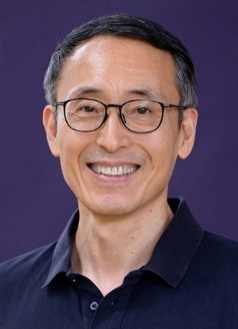
Prof. Jeong-Bae SON
University of Southern
Queensland, Australia
Queensland, Australia
Speech Title
AI-Powered Language Teaching: Challenges and Opportunities
Abstract
Artificial intelligence (AI) is changing our educational landscape. What do we know about AI? What is AI literacy? How can we develop AI literacy? What is AI-powered language teaching? What roles and competencies are required of language teachers in AI-powered language teaching? What AI tools are available for second/foreign language education? How can language teachers integrate AI tools effectively into their teaching? What research needs to be conducted on the use of AI tools for language learning and teaching? Where are we heading? These questions are being widely raised and discussed in the field of computer-assisted language learning (CALL). We will explore the questions and talk about challenges and opportunities in the era of AI. We will also look at some AI-powered language teaching activities based on Son’s (2024) AI literacy framework, which highlights using AI creatively, critically, effectively, efficiently, and ethically. The framework involves the development of understanding, knowledge, and skills for using AI applications and tools for specific purposes.
Biodata
Professor Jeong-Bae Son, Ph.D., is an author, an educator, and a researcher. He serves as the Director of the Technology-Enhanced Language Teaching Research Institute (TELTRI) and the President of the Asia-Pacific Association for Computer-Assisted Language Learning (APACALL). He is also an Honorary Professor at the University of Southern Queensland, Australia. His areas of specialisation are Applied Linguistics and TESOL. His research interests include CALL, technology-enhanced language teaching, AI-powered language teaching, digital literacy, AI literacy, academic English writing, and language teacher education. He has developed a number of CALL applications, published extensively in the field of CALL, and conducted seminars and workshops around the world. He is the author of Teacher Development in Technology-Enhanced Language Teaching (Palgrave Macmillan, 2018) and Insights into Digital Literacy in Language Teaching (Castledown, 2024). Details of his research can be found on his website at <https://drjbson.com>.

Prof. MA Qing
The Education University of
Hong Kong,China
Hong Kong,China
Speech Title
Advancing English Teacher Professional Development in the AI Era: Insights from Pre‑Service and In‑Service Teacher Collaboration
Abstract
As AI and corpus technologies reshape language education, this keynote synthesizes evidence from three cross-tier collaboration research studies among pre-service and in-service teachers to outline a practical agenda for professional development. Study 1 (N > 150) involved teachers from more than 28 countries/regions participating in online teacher professional development (TPD) via a Community of Inquiry (CoI) approach. Social network and CoI analyses showed strong social/cognitive presence and teacher knowledge building; design artifacts and interviews linked teacher interaction patterns to observable TPACK growth. Case Study 2 examined a pre‑/in‑service teacher pair in the Chinese context designing corpus‑supported argumentative writing for 73 students. Reciprocal learning emerged: the in‑service teacher mentored pedagogy and content, while the pre‑service teacher contributed corpus‑technology fluency, with growth within each partner’s zone of proximal development. Case Study 3 followed two pre‑/in‑service pairs in Indonesia co‑designing AI‑ and corpus‑enhanced reading lessons. TPACK development was dialogic and situated; teachers applied pedagogical restraint with AI to protect critical thinking, while corpus tools reliably supported vocabulary and comprehension, with positive student perceptions and modest gains. Together, these studies yield scalable TPD principles: structured cross‑tier teams, adoption of iterative design‑teach‑reflect cycles, alignment of technological tools with student learning aims, and foregrounding free and equitable learning opportunities for language teachers.
Biodata
Qing Ma (Angel) is a Professor in the Department of Linguistics and Modern Language Studies and Associate Dean (Research & Postgraduate Studies) in the Faculty of Humanities at The Education University of Hong Kong. Trained in applied linguistics, her research has centered on language technology spanning three interconnected areas: (a) second language vocabulary acquisition, (b) technology‑enhanced language learning (CALL and MALL), and (c) corpus‑based language pedagogy (CBLP). She pioneered CBLP, receiving several international awards: (1) the 2025 TESOL Award for Excellence in Research, USA; (2) the 2020 Esperanto Access to Language Education Award, USA; (3) the 2019 Silver Medal at the 47th International Exhibition of Inventions of Geneva, Switzerland. She serves as Associate Editor for five international journals: Computer Assisted Language Learning (CALL), Language Learning & Technology (LL&T), International Journal of Computer-Assisted Language Learning and Teaching (IJCALLT), The Journal of China Association for Computer-Assisted Language Learning (ChinaCALL), and Research and Practice in Technology Enhanced Learning (RPTEL).

Prof. XU Yueting
South China Normal
University,China
University,China
Speech Title
Cultivating Pre-service Teachers’ Critical Thinking in the AI Era: From Curriculum to Assessment
Abstract
The teaching profession is evolving against the backgrounds of overlapping global challenges and breathtaking technological shifts. When changes in education accelerates, teacher education cannot just tweak at the margin. As teacher educators, we need to rethink teaching itself, redesign what we teach and how we assess, and ultimately reflect on what preparing qualified teachers really means today and tomorrow. To address this issue, this talk introduces what we have done so far in the teacher education program of South China Normal University (SCNU) to nurture a profession to be agile enough to meet future challenges: understanding critical thinking as an essential skill and disposition for pre-service teachers, developing and adapting teacher education courses, innovating teacher educator’s pedagogical practices, and transforming assessment tasks. While these attempts are still tentative, this talk concludes with implications for teacher education in the era of AI, and provides food for thought regarding how to prepare teachers to be resilient enough to navigate uncertainty, confident enough to embrace the unknown, and capable enough to empower their students to do the same.
Biodata
Yueting Xu is Professor at School of Foreign Studies of South China Normal University in China. She is among the World’s Top 2% most-cited scientists (2022-2025) by Stanford University and also a highly cited scholar on Elsevier’s list from 2020 to 2025. She is also a Top 1% highly cited scholar on CNKI (2024 & 2025). Her research interests include teacher assessment literacy, online education, teacher identity and emotions, and parental involvement in education.

Dr. Yiannis PAPARGYRIS
LANGUAGECERT, UK
Speech Title
Language Assessment in the Era of AI: Implications for Design, Validity, and Practice
Abstract
The rapid development of artificial intelligence (AI) is reshaping language education, with significant implications for language assessment. AI-powered tools can now generate texts, provide feedback, and simulate communicative interaction, challenging traditional assumptions about what exactly language tests measure and how they should be designed
This presentation explores the implications of AI for language assessment across three key areas: test design, validity, and assessment practice. First, it examines how the availability of AI tools dictate reconsideration of task design, authenticity, and test integrity. Second, it discusses the impact of AI on validity arguments, including questions about construct representation, test fairness, and the interpretation of scores. Finally, the presentation considers how AI can also enhance assessment practice through automated scoring, item development, and data-informed validation processes, making extensive reference to LanguageCert’s internal development and validation processes.
Drawing on current developments in digital assessment and practical examples from large-scale language testing, the talk highlights both opportunities and risks. It argues that educational assessment professionals should engage critically with AI to ensure that language tests remain valid, meaningful, and relevant in an increasingly AI-mediated communicative environment.
Biodata
Dr. Yiannis Papargyris is an education management professional with over 20 years’ experience in the fields of English-medium Higher Education, Qualification Development and Language Assessment. At PeopleCert, he holds the position of Assessment Director & Interim Quality Director and is responsible for the development and fitness-for-purpose of the LanguageCert exams portfolio. He is a regular contributor to LanguageCert’s Research and Validation programme.
Yiannis completed his PhD at the University of Birmingham where he taught for several years. He is also a Chartered Educational Assessor.
END